
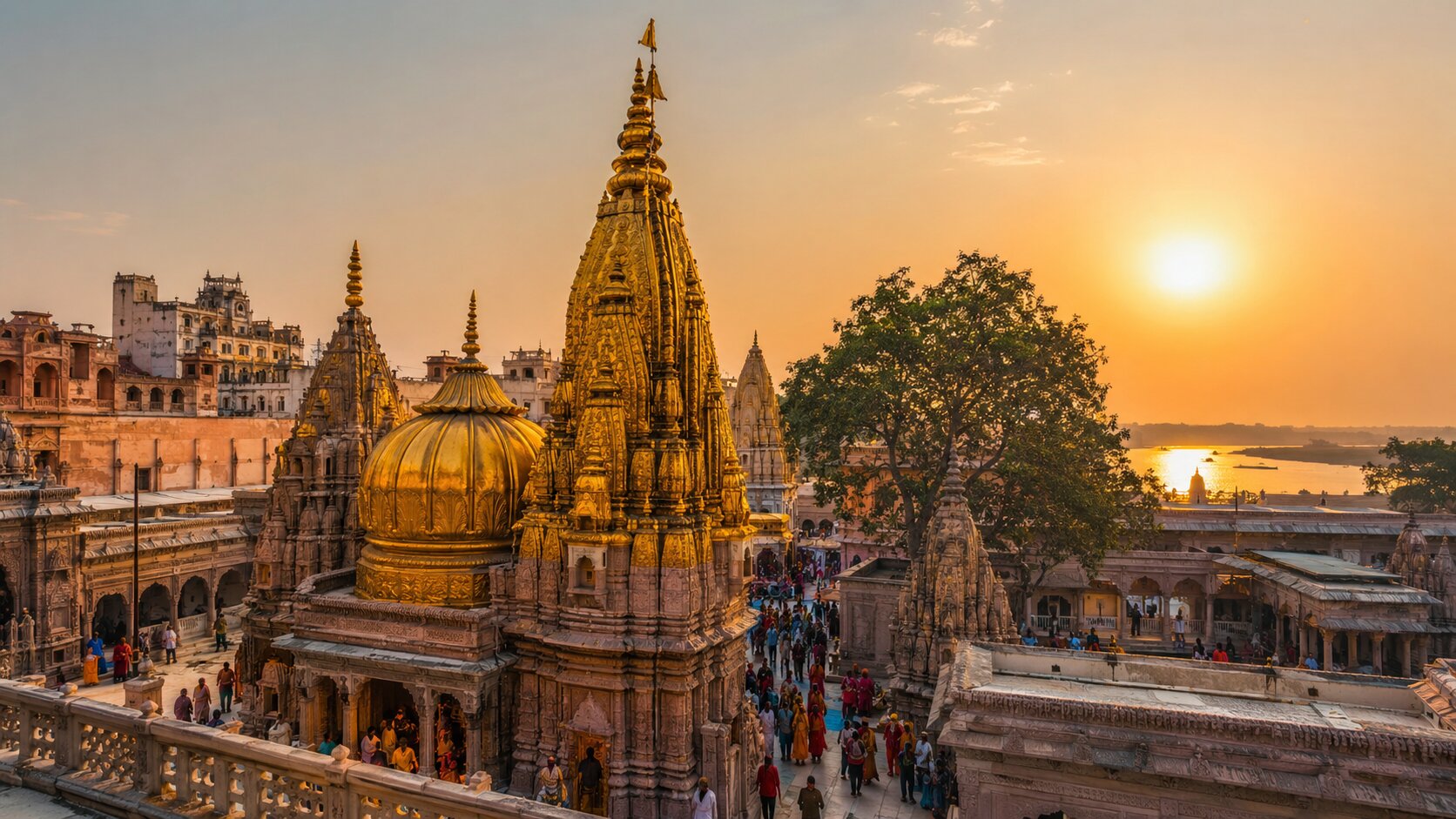

If you are planning a spiritual journey to Varanasi (Kashi) to visit Baba Vishwanath, this comprehensive guide will help you plan a seamless trip. Following the completion of the magnificent Kashi Vishwanath Dham Corridor, the darshan management system has become highly organized, spacious, and hassle-free compared to the past. Based on the latest updates available as of June 2026, this article provides all the essential details regarding darshan slots, daily aarti schedules, ticket bookings, entry rules, transport, and accommodation.
Fast Facts (30-Second Overview)
- Presiding Deity: Shri Kashi Vishwanath Temple houses one of the 12 sacred Jyotirlingas of Lord Shiva.
- Darshan Fee: General public darshan is completely free of charge.
- VIP Facility: A paid fast-track option called “Sugam Darshan” is available for convenience.
- Prohibited Items: Mobile phones, cameras, smartwatches, and all other electronic gadgets are strictly banned inside the temple premises.
- Mangala Aarti: Highly recommended, but requires advanced booking at least a month in advance due to limited slots.
- Peak Footfall Days: The temple experiences maximum crowds during Shravan Maas (July–August), Mahashivratri, Dev Deepawali, and on Mondays.
Shri Kashi Vishwanath Temple: At a Glance
| Information | Details |
|---|---|
| Temple Name | Shri Kashi Vishwanath Temple |
| Location | Varanasi, Uttar Pradesh, India |
| Main Deity | Lord Shiva (Baba Vishwanath) |
| Official Website | shrikashivishwanath.org |
| General Darshan | Free (via public queues) |
| Sugam Darshan (VIP) | Paid facility (Approx. ₹300 per person) |
| Nearest Railway Stations | Varanasi Junction (Cantt – BSB), Banaras Station (BSBS) |
| Nearest Airport | Lal Bahadur Shastri International Airport (Babatpur – VNS) |
Religious and Historical Significance
Varanasi is widely revered as one of the oldest continuously inhabited cities in the world. According to Hindu mythology, Kashi rests securely on the tip of Lord Shiva’s trident (Trishul), offering a profound spiritual aura to every pilgrim who walks its ancient paths.
An Elite Spot Among the 12 Jyotirlingas
Shri Kashi Vishwanath Temple holds a supreme position among the twelve sacred Jyotirlingas. It is believed that Lord Shiva resides here eternally. Scriptures say that those who spend their final days in Kashi attain Moksha (liberation from the cycle of birth and death) as Mahadeva himself whispers the saving Taraka Mantra into their ears.
The Legacy of Ahilyabai Holkar
The structure we see today stands as a monument to resilience and devotion. After the historical temple faced destruction over the centuries, it was Queen Ahilyabai Holkar of Indore who courageously rebuilt the current temple structure in 1780. Later, in 1835, Maharaja Ranjit Singh of Punjab generously donated nearly 1,000 kg of pure gold to plate the temple’s iconic spires, earning it the name “The Golden Temple of India.”
The Transforming Kashi Vishwanath Dham Corridor
The landmark Kashi Vishwanath Dham Corridor project has completely transformed the pilgrimage experience. Previously tucked away inside a dense web of narrow, congested alleyways, the temple complex has expanded dramatically. Today, pilgrims can take a holy dip in the River Ganges at Lalita Ghat and walk directly up a beautiful, wide pathway into the temple courtyard without getting lost in the old lanes.
Daily Darshan and Aarti Schedule
To plan your itinerary perfectly, it is crucial to know the precise daily rituals and public hours of the temple:
| Name of Aarti / Ritual | Timings | Booking Type |
|---|---|---|
| Mangala Aarti | 03:00 AM to 04:00 AM | Advance Online Booking Only (Strictly limited slots) |
| Bhog Aarti | 11:15 AM to 12:20 PM | Available both Online & Offline |
| Saptarshi Aarti | 07:00 PM to 08:30 PM | Available both Online & Offline |
| Shringar / Shayan Aarti | 09:00 PM to 10:15 PM | Available both Online & Offline |
| General Darshan | 06:00 AM to 09:00 PM | Free (Via general queue management) |
Note: Timings are subject to minor adjustments during major festivals, the holy month of Shravan, or sudden administrative updates.
How to Book Sugam Darshan and Online Tickets
If you are traveling with elderly family members or young children, or simply have limited time in the city, the Sugam Darshan (priority entry) service is an excellent option.
- Benefits of Sugam Darshan: This pass grants you access through a dedicated priority lane, drastically cutting down your waiting time to roughly 20–30 minutes. Depending on the day’s management, pilgrims are also gifted an Angavastram (sacred stole) and temple Prasad.
- Online Booking Process: Make sure to use only the official web portal:
shrikashivishwanath.org. You will need to select your date and time slot, and upload a valid government-issued ID proof (such as a Passport, Voter ID, or [ID Redacted]). The standard fee is ₹300 per person (prices may surge on special religious occasions). - Offline On-Spot Booking: If online tickets are sold out, you can check availability for offline spot-tickets at the designated helpdesk counters near Gate No. 1 (Dhundhiraj Ganesh Gate).
⚠️ Traveler Safety Warning: Be highly cautious of unauthorized local guides or fake websites operating around the ghats that promise “instant, 5-minute VIP entry” for hefty cash payments. Never hand over cash to unofficial individuals. Always stick strictly to the official ticket booths or the verified government portal.
The Best Time to Visit the Temple
- Off-Peak Hours for Lower Crowds: For a peaceful, unhurried darshan, the ideal window is early morning between 4:00 AM and 7:00 AM. Alternatively, the afternoon window between 1:00 PM and 3:00 PM sees relatively thinner crowds.
- Peak Crowded Seasons: The temple becomes exceptionally crowded during the following times. If you prefer avoiding massive queues, try to plan around these dates:
- The holy month of Shravan (especially Shravan Mondays)
- Mahashivratri and Dev Deepawali
- New Year’s Day (January 1st)
Essential Rules and Dress Code Guidelines
Dress Code (Attire)
- For General Darshan: Pilgrims are expected to wear modest, respectful clothing. Men should ideally wear kurta-pyjamas, pants, shirts, or traditional dhotis. Women are advised to wear sarees, salwar-suits, or other modest Indian traditional attire. Avoid wearing short skirts, shorts, or ripped jeans, as security personnel may deny entry.
- Special Rule for Sparsh Darshan: If you intend to enter the inner sanctum to physically touch the holy Jyotirlinga (permitted during Mangala Aarti or specific special poojas), a strict traditional dress code applies: men must wear a traditional Dhoti-Angavastram and women must wear a Saree.
Prohibited Items Inside the Complex
Due to high-level security measures, you are strictly prohibited from carrying the following inside the gates:
- Mobile phones, cameras, smartwatches, earphones, or any other electronic gadgets.
- Leather belts, leather wallets, tobacco, cigarettes, and lighters.
Cloak Room and Locker Facilities
To store your valuables safely, the temple administration operates secure locker counters near all major entry gates (such as Godowlia Gate and Chowk Gate). You can safely leave your digital devices and footwear here and collect a secure locker token before stepping into the queue line.
Checklist: Do’s and Don’ts
| What to Do (✓) | What to Avoid (✗) |
|---|---|
| ✓ Keep a valid, original physical ID proof with you at all times. | ✗ Do not pay touts, unofficial guides, or middlemen promising quick entries. |
| ✓ Plan and book your stay well in advance if visiting during festival seasons. | ✗ Do not try to sneak in prohibited items like phones or smartwatches in the queue. |
| ✓ Use only the official temple-run lockers to deposit your digital devices. | ✗ Do not violate queue disciplines or argue with security personnel. |
| ✓ Reach the gate slightly ahead of your scheduled slot if you have booked an Aarti. | ✗ Do not take pictures of sensitive security zones or personnel around the outer complex. |
How to Reach and Where to Stay
Transport and Logistics
- By Train: Varanasi Junction (Cantt – BSB) and Banaras Station (BSBS) are your primary entry points. Both stations offer round-the-clock connectivity to the temple area via e-rickshaws, local auto-rickshaws, and app-based cabs heading toward Godowlia Crossing, which is just a short walk from the temple gates.
- By Air: The Lal Bahadur Shastri International Airport in Babatpur (VNS) sits approximately 24 km away from the temple. Pre-paid and app-based taxis are readily available right outside the arrival terminal.
Accommodation Choices
Varanasi caters beautifully to every budget. You can choose from peaceful temple-run Dharamshalas, budget guesthouses, cultural homestays, or luxury heritage hotels. If your primary goal is to catch the magical morning Subah-e-Banaras and the iconic evening Ganga Aarti, looking for accommodations close to Dashashwamedh Ghat or Assi Ghat will save you a lot of commute time.
The Perfect 1-Day Kashi Itinerary
If you are visiting Varanasi for a quick single-day trip, here is a highly optimized flow to maximize your day:
- Morning: Holy dip in the Ganges (at Dashashwamedh or Lalita Ghat) ➔ Shri Kashi Vishwanath Temple Darshan ➔ Blessings at the adjacent Maa Annapurna Temple.
- Afternoon: Visit Kaal Bhairav Temple ➔ Enjoy a walk through the Kashi Vishwanath Dham Corridor and explore local silk and handicraft markets.
- Evening: Witness the spectacular, world-famous Ganga Aarti at Dashashwamedh Ghat (either from a booked boat or by sitting early on the steps).
Iconic Attractions to Explore Nearby
- Kaal Bhairav Temple: Known traditionally as the “Kotwal” (police chief) of Kashi. Local spiritual beliefs state that a pilgrimage to Varanasi remains incomplete without seeking his permission and blessings.
- Maa Annapurna Temple: Located mere steps away from the Vishwanath temple, she is worshipped as the goddess of nourishment, ensuring no one in the sacred city ever goes hungry.
- Dashashwamedh Ghat: The vibrant epicenter of Varanasi’s riverfront, world-renowned for its choreographed evening grand musical prayer ritual to Mother Ganga.
- Manikarnika Ghat: One of the oldest and most sacred cremation ghats, it offers an intense, philosophical perspective on life, mortality, and the eternal nature of the soul.
- Assi Ghat: Famous for its tranquil morning atmosphere, sunrise clay-cup Chai, yoga sessions, and traditional music programs during Subah-e-Banaras.
Frequently Asked Questions (FAQs)
Q. Is a paid ticket mandatory to enter the Shri Kashi Vishwanath Temple?
Ans: No. General entry and darshan are completely free for everyone. You simply need to join the general public queue.
Q. Does Sugam Darshan require a separate ticket?
Ans: Yes, this is a premium, paid facility designed to bypass the long queues. It can be booked online via the official website or bought offline based on real-time slot availability.
Q. Can I take my smartphone inside the temple if it is switched off?
Ans: No. Smartphones and all forms of cameras are strictly barred beyond the security check gates, regardless of whether they are powered off. They must go into the lockers.
Q. Are there any arrangements for elderly or differently-abled pilgrims?
Ans: Yes. Under the Varanasi Smart City infrastructure initiative, free golf carts (go-carts) and wheelchair assistance are actively provided to ferry elderly and movement-impaired pilgrims from Godowlia Crossing and the ghat entry gates.
Q. Can foreign nationals visit the inner temple?
Ans: Yes, foreign tourists are warmly welcome to experience the temple. They must carry their valid original passport and visa documents for mandatory security verification at the entry point.
Q. Which months offer the most comfortable weather for visiting Kashi?
Ans: The winter season, running from October to March, is the absolute best time to visit, featuring pleasantly cool and comfortable daytime temperatures perfect for exploring.
Disclaimer: This travel guide has been carefully compiled using official announcements valid up to June 2026, local administrative guidelines, and field insights from resident priests. Because temple management trusts can update security protocols, entry tariffs, and ritual timings unexpectedly based on seasonal requirements, we highly recommend checking the live notification bar on the official portal
shrikashivishwanath.orgright before finalizing your morning transit.